.jpg)
.jpg)
.JPG)
.jpg)
.jpg)
_看图王.jpg)



NEWS
Why Import Custom Cabinets from China in 2026?
The global cabinetry market has evolved significantly. According to IBISWorld's 2025 cabinetry manufacturing report, China remains the world's largest furniture and cabinet exporter, with an estimated export value exceeding $80 billion annually. For builders, contractors, and distributors in North America, Australia, and New Zealand, importing custom cabinets directly from a Chinese manufacturer offers three key advantages:

Cost savings of 30-50% compared to locally sourced custom cabinetry
Full customization in dimensions, materials, finishes, and hardware
Integrated production—kitchen, bath, wardrobe, and laundry from one factory
How to Evaluate a Chinese Cabinet Manufacturer
1. Certifications and Compliance
| Certification | What It Ensures |
|---|---|
| KCMA A161.1 (ANSI) | Structural integrity, finish durability, drawer performance |
| CARB Phase 2 | Formaldehyde emission limit ≤ 0.05 ppm (hardwood plywood) |
| ISO 9001 | Quality management system certification |
| CE (EN 13986) | European standard for wood-based panels |
| FSC / PEFC | Responsible forest management and chain of custody |
2. Production Capacity and Facility
Look for manufacturers with integrated facilities that handle cutting, edge banding, drilling, finishing, and assembly under one roof. A facility of 10,000-20,000+ square meters typically indicates sufficient capacity for both small and large-scale projects. In-house finishing capabilities (UV coating lines, spray booths, dust collection) ensure quality control.
3. Export Experience
An experienced export manufacturer will offer:
English-speaking project managers
Familiarity with North American dimensional standards (24" base depth, 36" counter height)
Knowledge of destination country building codes
Wooden crate packaging and container loading expertise
Customs documentation and compliance support
The Import Process: Step by Step
Step 1: Define Your Project Requirements
Prepare detailed specifications including cabinet layouts, dimensions, material preferences, finish types, hardware brands (e.g., Blum, Hettich), and delivery timeline. Share floor plans, elevations, or 3D models.
Step 2: Request Quotation and Samples
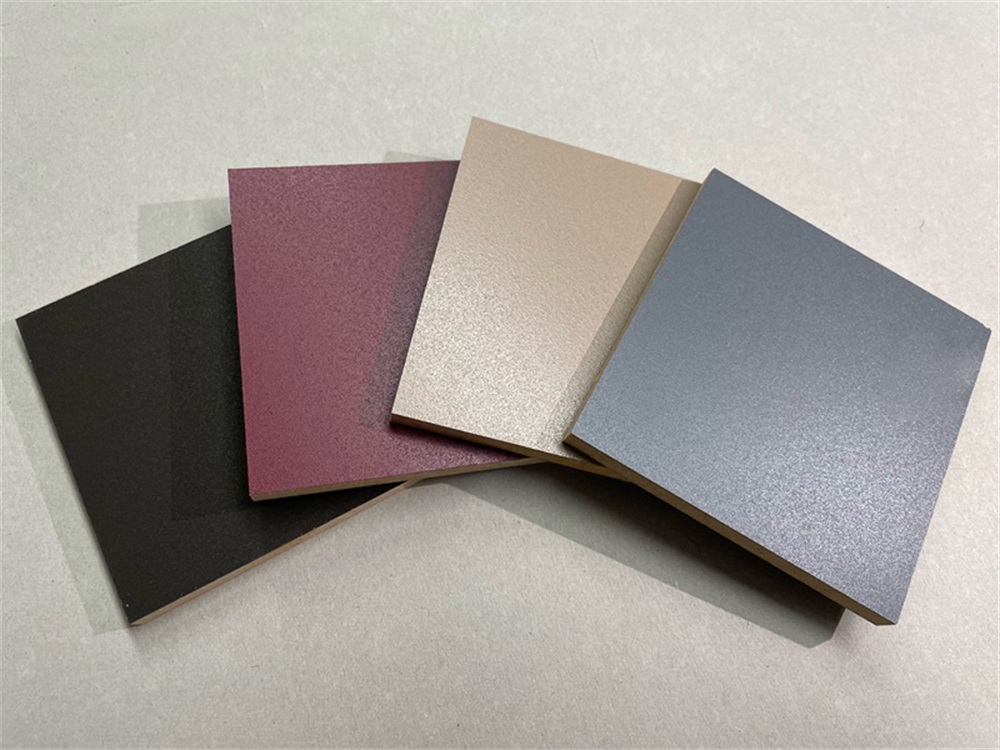
A reputable manufacturer will provide a detailed quote within 48-72 hours, including unit pricing, material specifications, and estimated lead time. Request material samples (door finish, wood species, hardware) shipped to your address for approval.
Step 3: Approve Shop Drawings
The manufacturer produces detailed shop drawings (CAD) for your review. This is the critical stage for catching dimensional errors. Approve only when every detail matches your requirements.
Step 4: Production and Quality Control
Typical production time ranges from 4-8 weeks depending on order complexity and quantity. Request in-process photos and a pre-shipment inspection report. Key QC checkpoints include:

Material certification verification (CARB Phase 2, E1 grade)
Dimensional accuracy (±1mm tolerance)
Finish quality (no orange peel, runs, or dust inclusions)
Hardware function test (door/drawer operation)
Crate packaging integrity
Step 5: Shipping and Customs
Most manufacturers offer FOB (Free on Board) or CIF (Cost, Insurance, Freight) shipping terms. Transit times by sea freight:
| Destination Port | Transit Time | Typical Container |
|---|---|---|
| Los Angeles / Long Beach, USA | 14-18 days | 20ft or 40ft HQ |
| Vancouver, Canada | 12-16 days | 20ft or 40ft HQ |
| Sydney / Melbourne, Australia | 18-22 days | 20ft or 40ft HQ |
| Auckland, New Zealand | 20-25 days | 20ft or 40ft HQ |
Cost Factors to Consider
Material grade: CARB Phase 2 plywood costs more than E2 particleboard but offers superior durability and safety
Finish type: UV-cured > Lacquer > Melamine > Thermofoil (price descending)
Hardware brand: Blum > Hettich > domestic brands
Order volume: Full container loads (FCL) reduce per-unit shipping cost
Customization level: Standard sizes cost less than fully custom dimensions
Common Pitfalls to Avoid
Skipping sample approval: Always receive and approve physical samples before production begins.
Ignoring dimensional standards: Ensure the manufacturer builds to your country's standards (24" base depth for North America).
Underestimating lead time: Factor in production (4-8 weeks) + shipping (2-4 weeks) + customs clearance (3-7 days).
Neglecting packaging: Insist on wooden crate packaging with corner protectors and moisture barriers for sea freight.
Not verifying certifications: Request actual certificates, not verbal claims.
At Trendmax Cabinetry, our 20,000-square-meter facility in Xiamen, China, produces custom kitchen, bath, and wardrobe cabinetry for global export. We hold KCMA compliance, use CARB Phase 2 certified materials, and provide full export documentation support. Contact us for a free project consultation.
Frequently Asked Questions
How long does it take to receive cabinets from China?
Total timeline: 6-12 weeks from order confirmation to delivery, depending on production complexity and shipping destination.
Is it cheaper to import cabinets from China?
Yes, typically 30-50% cheaper than equivalent custom cabinetry sourced locally, even after factoring in shipping and customs duties.
Do Chinese cabinet manufacturers meet US standards?
Reputable manufacturers like Trendmax comply with KCMA (ANSI A161.1), CARB Phase 2, and other relevant standards. Always request certificates before ordering.