.jpg)
.jpg)
.JPG)
.jpg)
.jpg)
_看图王.jpg)


NEWS
Why Hardware Defines Cabinet Quality
Cabinet doors and boxes get the visual attention, but it is the hardware that determines how a kitchen feels after five years of daily use. Hinges and drawer slides are the only moving parts in a cabinet, and industry testing bodies such as the KCMA (Kitchen Cabinet Manufacturers Association) cycle doors and drawers tens of thousands of times in their durability protocols precisely because hardware is where cabinets fail first. Choosing the right hardware is therefore a structural decision, not a cosmetic one.
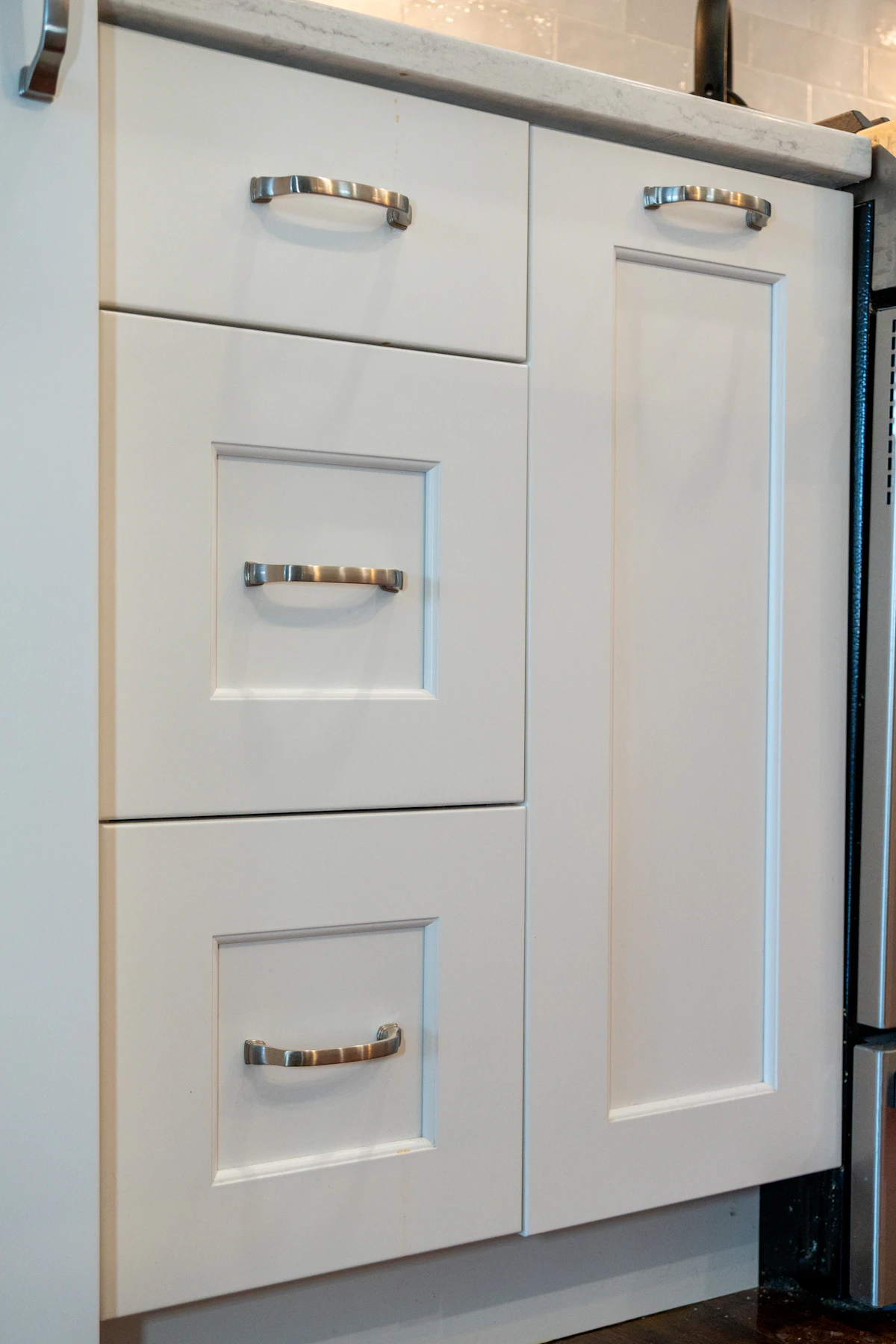
Cabinet Hinges: Types and Specifications
Concealed (European) Hinges
Concealed cup hinges are the default for modern frameless and face-frame cabinets. The hinge cup is bored into the door with a standard 35 mm hole at 11.5–12.5 mm from the edge, and only the arm is visible inside the cabinet. Key advantages:
Tool-free door removal: most models release from the arm with a spring clip, simplifying installation and cleaning
Three-way adjustment: cam screws adjust height, side-to-side and depth, hiding minor cabinet tolerances
Integrated soft-close: damping cartridges can be built in or clip on retrofit
Overlay and Inset Variants
Hinge choice depends on how the door sits relative to the cabinet face:
| Door Fit | Hinge Type | Typical Use |
|---|---|---|
| Full overlay | Full-overlay concealed hinge | Frameless and modern face-frame cabinets; doors nearly cover the box |
| Half overlay | Half-overlay concealed hinge | Shared partitions where two doors meet one panel |
| Inset | Inset concealed or surface hinge | Shaker and traditional styles where doors sit flush inside the face frame |
Drawer Slides: Options and Load Ratings
Slides carry more weight than any other hardware component—a cutlery-filled 30" drawer can easily hold 30–40 kg when extended. Three families dominate:
Ball-bearing side-mount slides: the workhorse. Full-extension steel ball-bearing slides are typically rated 45–57 kg (100–125 lb) per pair and tolerate rough handling, which makes them common in garage, workshop and rental housing cabinetry
Undermount slides: hidden beneath the drawer box for a clean sightline, usually paired with a thin metal-sided drawer and integrated soft-close and push-to-open. Typical ratings are 18–36 kg (40–80 lb)
Epoxy-coated friction slides: the budget option in single-wheel designs. They lack positive capture, so spec them only where cost outweighs longevity
Soft-Close and Push-to-Open Systems
Soft-close hardware uses a hydraulic damping cartridge to decelerate the door or drawer in the final 30–50 mm of travel. Beyond the obvious acoustic benefit, controlled closing reduces peak impact loads on joints, panels and drawer boxes—a meaningful factor in flat-pack and RTA cabinets where connections are screw-based rather than dowelled. Push-to-open mechanisms pair naturally with handleless slab-door kitchens: a light press releases a spring latch, and the damping system then closes the door.
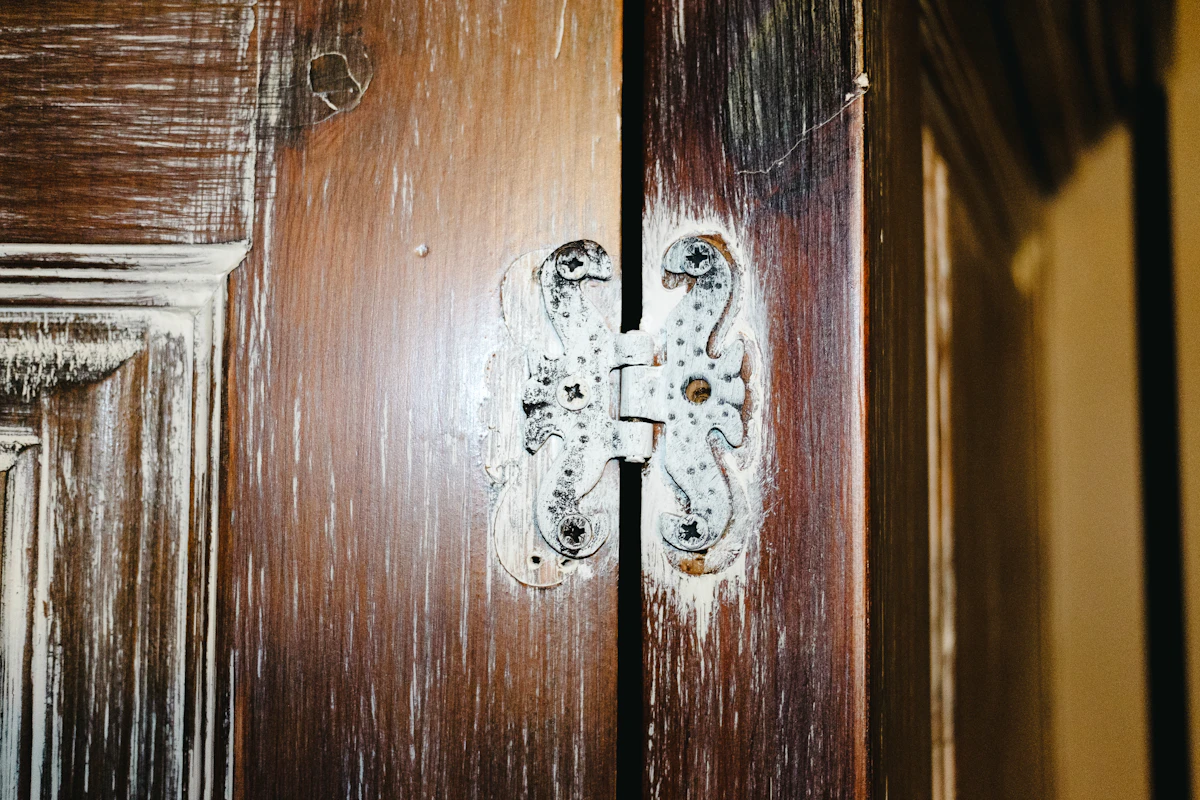
Finishes and Corrosion Protection
| Finish | Look | Durability Notes |
|---|---|---|
| Satin / brushed nickel | Cool silver, hides fingerprints | Standard for kitchens; excellent corrosion resistance |
| Matte black | High-contrast, industrial | Coating quality varies; check salt-spray test data for coastal homes |
| Brushed brass / champagne bronze | Warm metallic | Lacquered variants resist tarnish in humid kitchens |
| Polished chrome | Bright mirror finish | Very hard surface; shows water spots more readily |
What to Check When Sourcing Cabinets
When comparing cabinet suppliers, ask for specifics rather than brand names: hinge cycle-test ratings (KCMA protocols reference 25,000+ cycles for heavy residential use), slide load ratings at full extension, whether soft-close is standard or an upcharge, and the corrosion-test standard the finish meets (salt-spray hours). Manufacturers that produce kitchen, bath and wardrobe lines in one factory will also keep hardware consistent across rooms—one hinge system and one slide family throughout the house simplifies both installation and future service.